Solar Lease Vs Buy Terms Explained: A Plain-English Glossary
This solar lease vs buy glossary is for Austin-area homeowners who keep hitting unfamiliar terms while comparing solar quotes, lease contracts, and loan paperwork. Every entry gives you a plain-English definition you can use to read a proposal line by line and ask a provider the right question. I wrote it the way I would explain things over the fence, because most of this jargon exists to make a contract look simpler than it is. Use it alongside your utility's actual rate sheet, since in the Austin area the utility, not the town, decides your outcome.
- Solar lease: renting panels, paying monthly
- Power purchase agreement (PPA): paying per kilowatt-hour, not per month
- Solar loan: borrowing to own the system
- Cash purchase: paying outright, owning everything
- Escalator clause: your lease payment rises every year
- Buyout option: paying to end a lease early
- Lease transfer: moving the lease to a home's next owner
- UCC-1 filing: the lien-like notice a lease puts on your property record
- Lease credit (48E): the federal tax credit the leasing company keeps
- Purchase credit (25D): the ended federal credit for homeowner purchases
- Dealer fee: the hidden markup baked into many solar loans
- Export credit (buyback): what your utility pays for extra power
- Value of Solar: Austin Energy's credit rate for all the solar a home produces
- Production guarantee: the lease company's promise of output
- Performance monitoring: the app that shows what your panels make
- Operations and maintenance (O&M): who fixes it when it breaks
- System ownership: who legally holds title to the panels
Ways to Pay: The Four Paths
Every solar lease vs buy glossary has to start here, because the four payment paths decide everything else in your contract: who owns the panels, who gets the tax credit, and who fixes a broken inverter in year nine.
Understanding Solar Lease Options
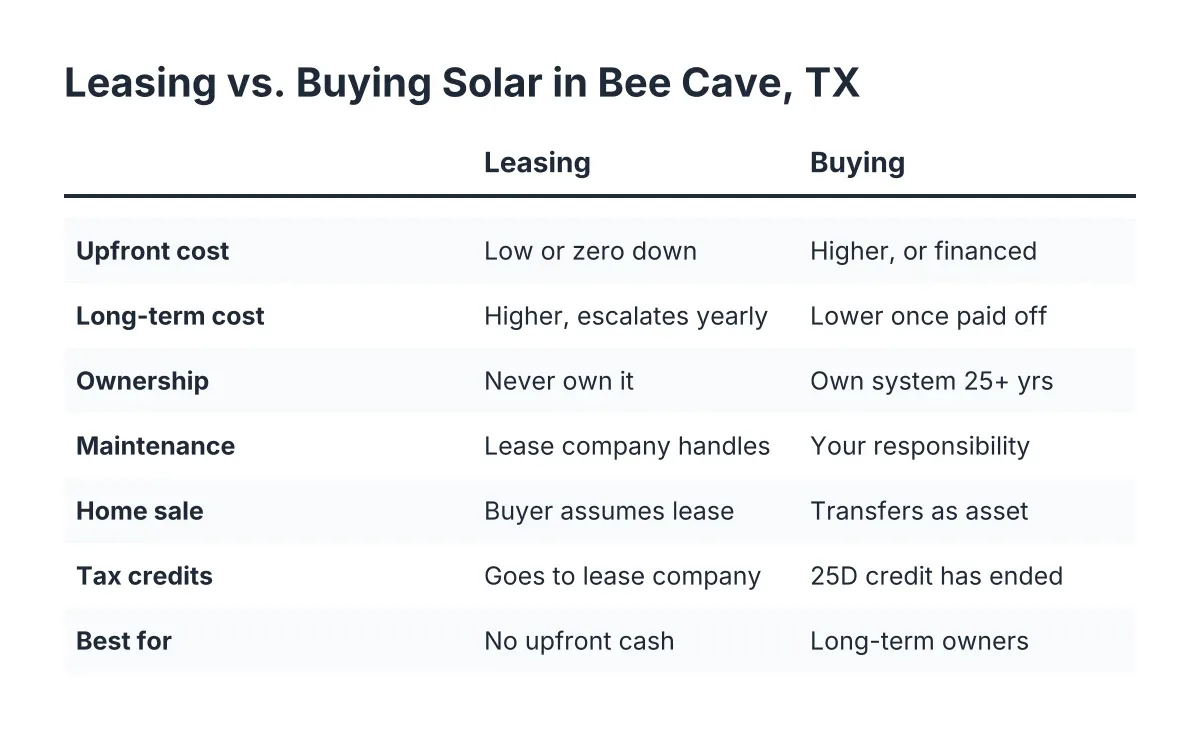
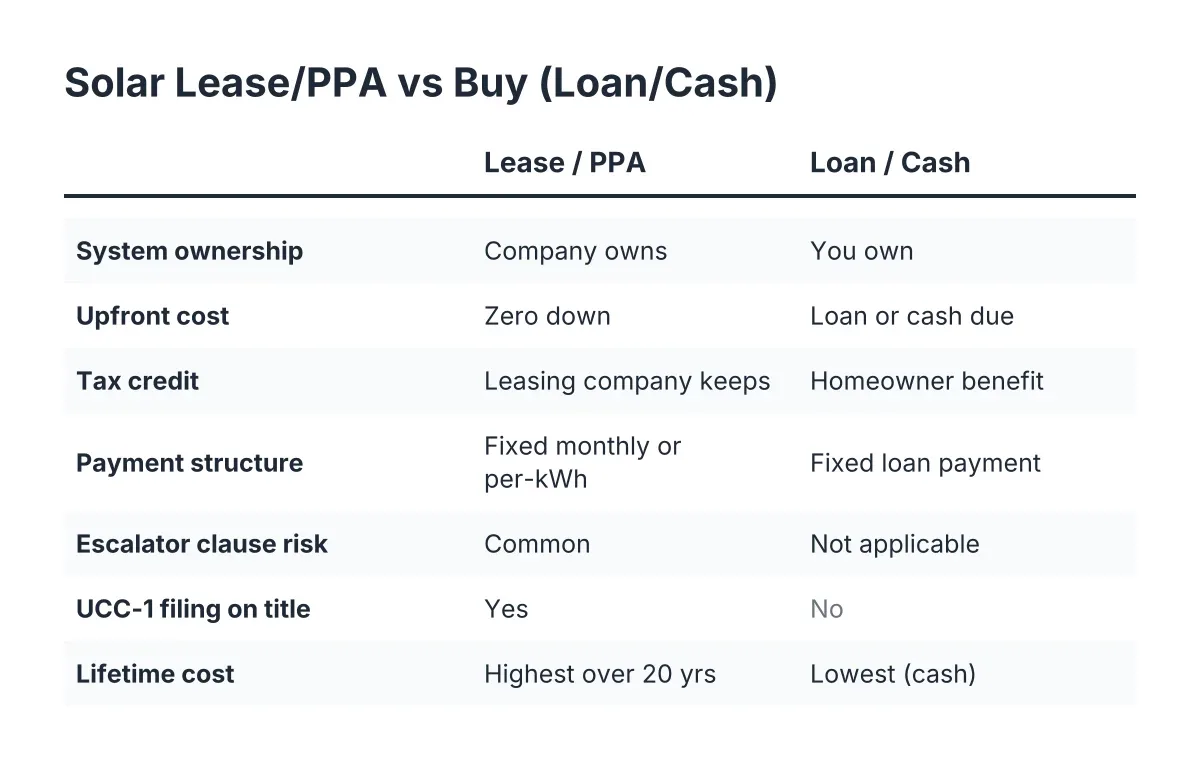
A solar lease is a contract where a company owns the panels on your roof and you pay a fixed monthly fee to use the power they make. You never own the system, so you give up the tax benefits and most of the long-term savings in exchange for no upfront cost. If a provider leads with "zero down" before showing you the full contract term, that usually signals a lease. Read the full term, often 20 to 25 years, before you compare it to anything else. I walk through which financing path fits which Austin-area utility in a separate article.
Power Purchase Agreement (PPA)
A power purchase agreement, or PPA, is a contract where a company owns the panels and sells you the electricity they produce at a set price per kilowatt-hour. It feels like a lease but your bill moves with production, so a cloudy month costs less and a sunny month costs more. The per-kilowatt-hour rate usually rises each year under an escalator. Ask for the year-one rate and the year-twenty rate side by side before signing.
Solar Loan
A solar loan is financing you take out to buy the system, so you own the panels from day one while paying the lender monthly. Ownership means any incentives and export credits belong to you, and the panels add to what you own rather than what you rent. The trap to watch for is the dealer fee, covered below, which can inflate the system price to buy down the interest rate. Compare the cash price to the financed price, not just the monthly payments.
Cash Purchase
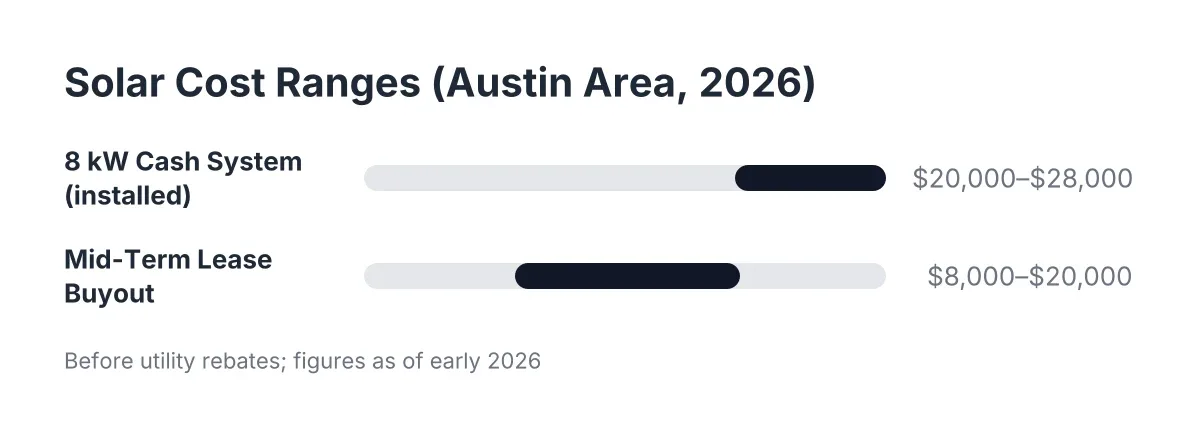
A cash purchase means paying the full system price upfront and owning everything outright. It has the lowest lifetime cost of the four paths because no lender or leasing company takes a cut over 20 years. The obvious catch is the upfront money. Whether cash beats a loan for you depends on your utility's export rate and how long you plan to stay in the house; your numbers will differ from any example you see online.
Lease Contract Terms That Decide Your Outcome
Escalator Clause
An escalator clause is a lease or PPA term that raises your payment by a fixed percentage every year, compounding over the life of the contract. A payment that looks cheaper than your utility bill in year one can pass it well before the contract ends. This is the single most expensive line in most lease contracts, and it hides in plain sight. The math on what an escalator does to a lease over 25 years deserves its own page, and I gave it one.
Buyout Option
A buyout option is a lease term that lets you pay a set amount to end the contract early and take ownership of the panels. The buyout price is usually set by a schedule in the contract or by a "fair market value" appraisal, which the leasing company influences. If you think you might sell the house or want out early, ask for the buyout schedule in writing before you sign. A company that will not show it to you is telling you something.
Lease Transfer
A lease transfer means moving your solar lease to the buyer of your home when you sell. The buyer has to qualify with the leasing company and agree to take over the payments, which can slow a sale or scare off a buyer who did not plan on a 20-year contract. This is where deciding between a solar lease and buy stops being a monthly-payment question and becomes a question about selling your house someday. Ask the leasing company for its transfer requirements upfront, not at closing.
UCC-1 Filing
A UCC-1 filing is a public notice a leasing company records against your property to protect its ownership of the panels on your roof. It is not a mortgage lien, but title companies and mortgage lenders treat it as a cloud on title that has to be dealt with when you sell or refinance. Most leasing companies will temporarily lift it for a refinance, but that takes time and paperwork. This term, and others leasing companies rarely volunteer, is covered in my piece on contract terms solar lease companies bury.
Production Guarantee
A production guarantee is a lease company's promise that the system will make at least a stated amount of electricity each year, with compensation if it falls short. It sounds protective, and it can be, but read how the shortfall payment is calculated and what counts as an excused shortfall. Shading from a tree that grows over ten years is often excluded. A guarantee is only as good as its exclusions list.
Money, Credits, and Who Keeps Them
Lease Credit (48E)
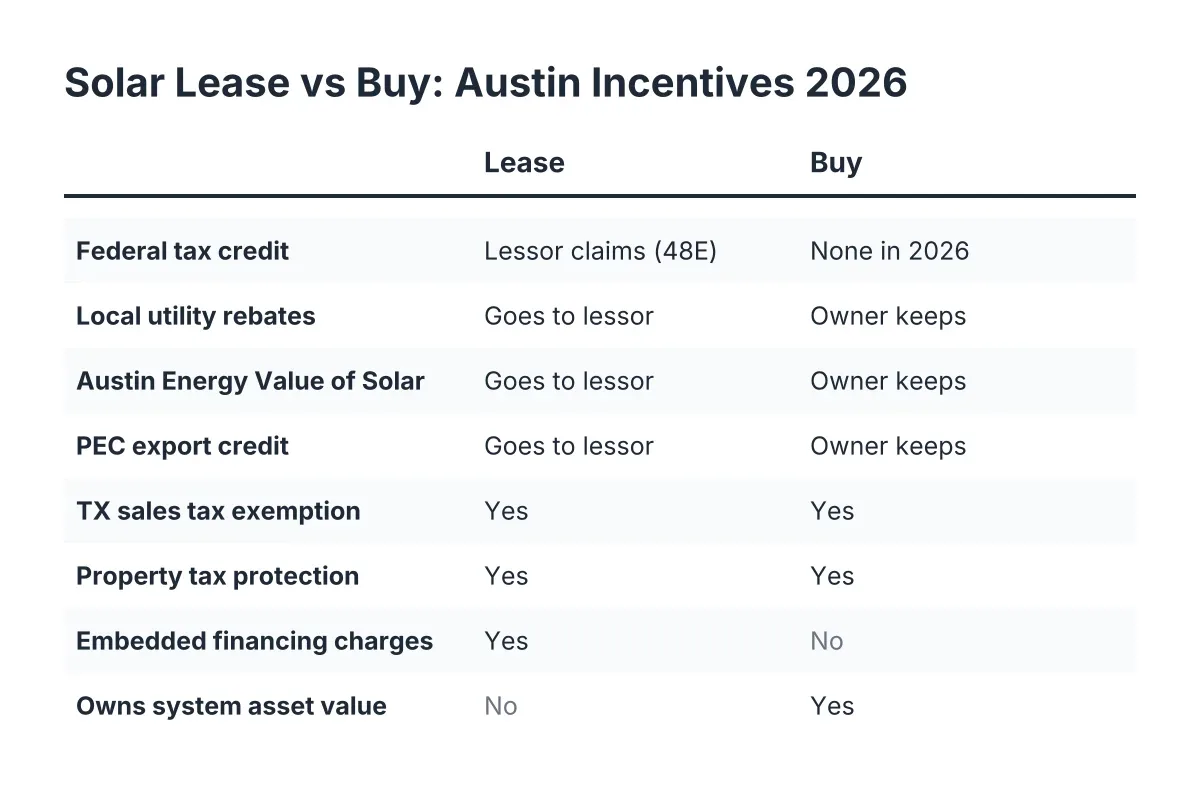
The lease credit is the federal tax credit, under section 48E, that goes to the company that owns a leased or PPA system, not to the homeowner. The leasing company keeps it and may or may not pass savings through in your monthly payment. This is why leases survived the end of the homeowner credit: the business-side credit did not end. When a salesperson says "the tax credit makes this work", ask who actually receives it.
Purchase Credit (25D)
The purchase credit was the federal tax credit, under section 25D, that homeowners claimed when they bought a system outright or with a loan. That credit has ended, which changed the buy-side math and is a reason many 2022-era comparison pages online are now wrong. Any quote or article still assuming you can claim it is out of date. Check the date on everything you read, including this page; your numbers will differ.
Dealer Fee
A dealer fee is a markup, often a meaningful percentage of the system price, that a solar lender charges the installer, who passes it into your quoted price. It is how a loan can advertise a low interest rate: the rate is bought down with money hidden in the price of the panels. The tell is a cash price and a financed price for the same system that sit far apart. Always ask for both prices in writing.
Export Credit (Buyback)
An export credit, also called buyback, is what your utility pays or credits you for electricity your panels send to the grid. In the Austin area there is no single answer: Austin Energy, Pedernales Electric Co-op, Oncor-area retail providers, Georgetown Utility Systems, and Bluebonnet each handle exports differently. Do not assume net metering exists where you live, because for most local utilities it does not in the classic one-for-one form. The export rate changes whether a lease or a purchase pencils out at your address.
Value of Solar
Value of Solar is Austin Energy's specific tariff for crediting solar customers, which pays a set rate for all the power your panels produce rather than netting it against your usage. Your consumption is billed at normal rates and your production is credited at the Value of Solar rate, on separate lines. The rate is recalculated periodically, so quotes built on an old rate mislead you. If you are in Austin Energy territory, this one tariff shapes your entire payback math.
Equipment and Ongoing Care
Performance Monitoring
Performance monitoring is the software, usually a phone app, that shows how much electricity your system produces in real time and over time. It matters in a lease because it is how you check whether the production guarantee is being met, and it matters in a purchase because it is how you catch a failed panel or inverter early. Ask who has access to the data and whether you keep it if the installer goes out of business.
Operations and Maintenance (O&M)
Operations and maintenance, or O&M, means the ongoing work of keeping a solar system running: monitoring, repairs, and replacing parts like inverters that wear out before the panels do. In a lease, the leasing company typically handles O&M, which is the strongest genuine argument for leasing. In a purchase, you rely on equipment warranties and the installer's workmanship warranty, so the installer's likely longevity matters as much as the hardware.
System Ownership
System ownership means holding legal title to the panels, inverters, and any home battery on your property. Ownership decides who claims incentives, who controls the equipment, and what happens when you sell the house. Under a lease or PPA you do not own the system even though it sits on your roof, and that distinction drives nearly every other term on this page. When a contract is unclear about ownership, that is not an accident.
Using These Terms
You can now take a lease contract or a purchase quote and read it line by line without getting lost, and that is the whole point of this solar lease vs buy glossary. Ask who keeps the tax credit, what the escalator compounds to, and what your specific utility pays for exports. A provider who answers those three questions plainly is worth your time; one who dodges them has answered a different question.
For help with solar lease vs buy, Austin Solar FAQ is the place to start.
Related guide: Solar lease vs buy — Complete Guide
Prefer to talk it through? Call +15125571906 — a quick call is usually the fastest way to get a straight answer for your situation.